
Know What’s Working Before Anyone Calls the Help Desk
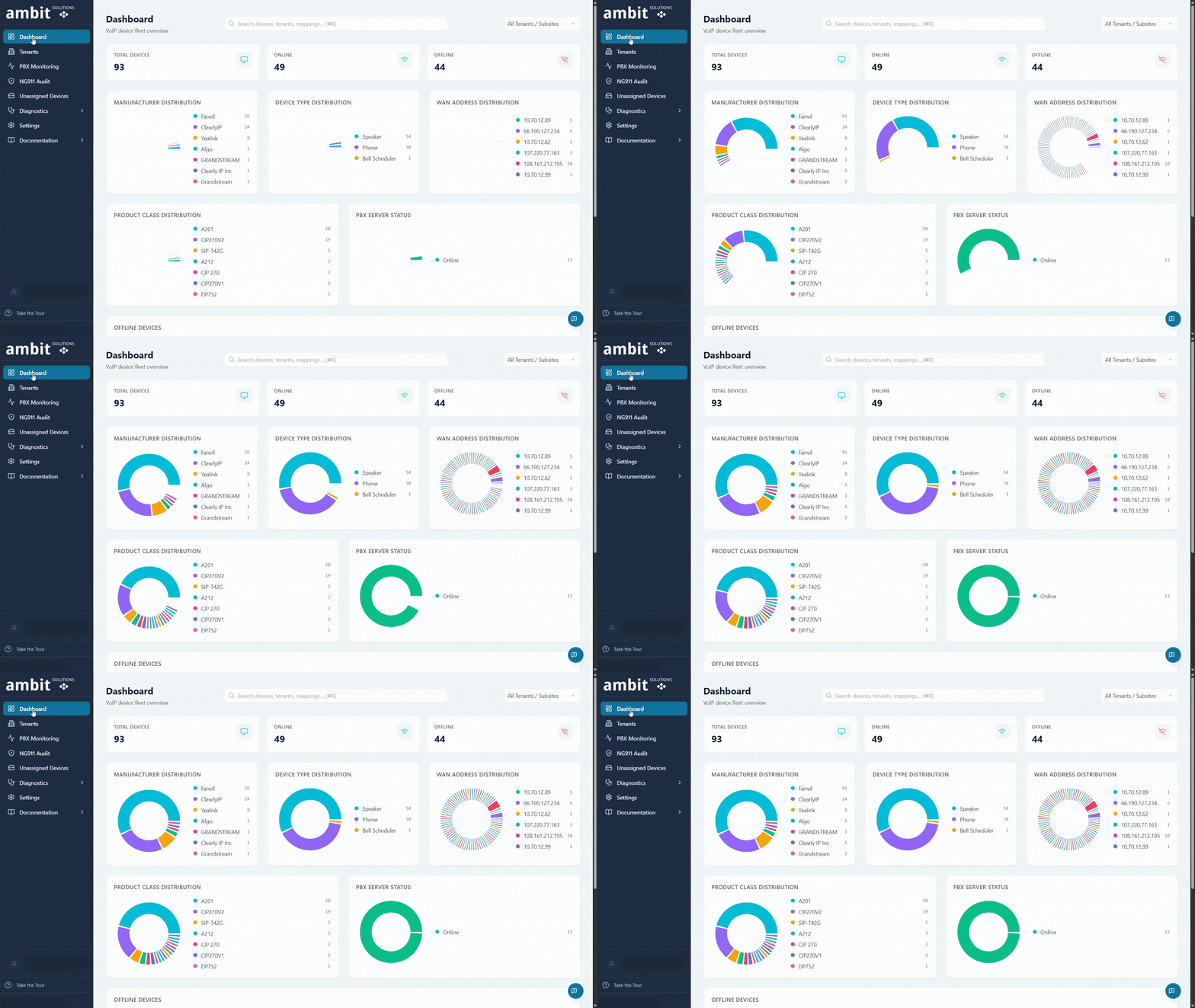
ADMP is the portal Ambit built to show you the state of your phones, speakers and phone servers in one place. See what’s offline, check that your backup matches your primary, and keep a building, floor and room on file for every extension. Built with school districts in mind.
One Portal. A Complete View.
90-SECOND ADMP EXPLAINER VIDEO
One portal for the questions your team asks every week
Most phone systems show you how they were first set up. ADMP shows what’s happening now.
- Find the phone behind a help desk ticket without logging into the phone server.
- See every offline device in one click, filtered by site, device type or manufacturer.
- Get an email or a webhook alert when a device goes offline, for the whole district or for one site, so each site’s technician sees only theirs.
- Check that your backup phone server matches your primary.
- Keep a building, floor and room on file for each extension.
- Request a warranty replacement from the same screen where you found the problem.
More Than a Device List
ADMP began as a way to manage phones and speakers from one place. It now covers monitoring, 911 location records, failover checks, testing, warranty requests and setting up new devices.
- Monitoring and alerts
- 911 location records
- Failover comparison
- Device testing
- Extension and device editing
- Warranty tracking and requests
- Provisioning and deployment tools
911 Location Records Drift Unless Someone Updates Them
Phones move, classrooms get reassigned and staff turn over. A phone whose record still says Room 118 can send a dispatcher to the wrong room. Under Ray Baum’s Act, location information down to floor and room must travel with 911 calls from fixed phones. ADMP keeps a building, floor and room on file for each extension, so updating a record takes a few clicks, not a spreadsheet hunt.
From One Login, Your Team Can:
- Assign each extension to a building, floor and room
- Update the record when a phone moves
- Complete your twice-yearly location audit inside ADMP and submit it for Ambit’s review
ADMP doesn’t treat location data as a one-time task. It gives your team a practical way to keep records current as things change.
The Location Data Behind the Move to NG911
NG911 carries 911 calls over IP networks. What your phone system has to do is pass accurate location information with each call, and that information is only as good as the records behind it. What your district or organization controls is the quality of its location data.
The Path of a 911 Call
The FCC’s NG911 transition deadlines apply to originating service providers such as carriers, not directly to school districts.
Know Your Backup Phone Server Matches Before You Need It
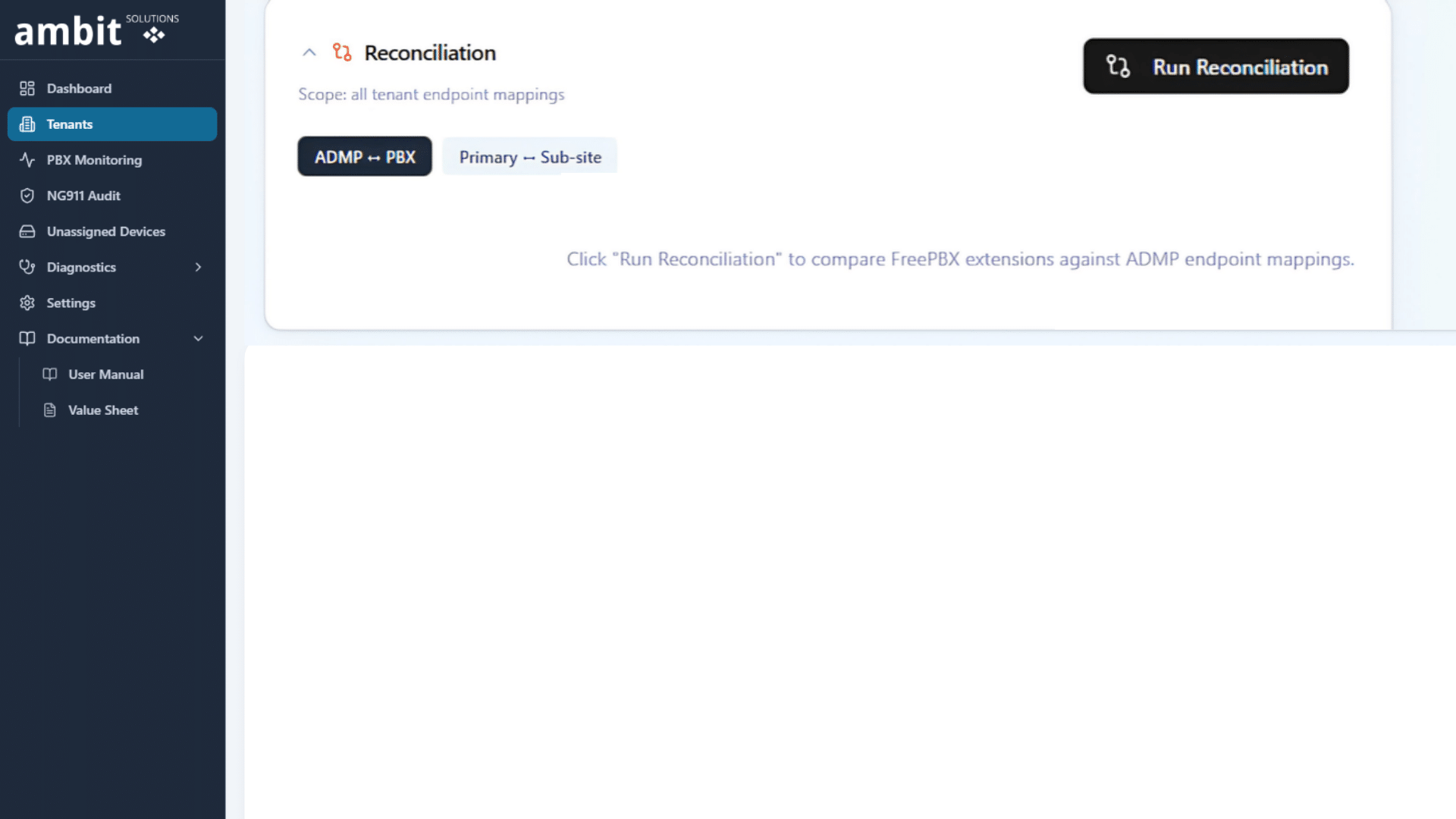
Cellular failover is the internet backup: when the internet goes down, each site fails over to a backup phone server on premise. Phones register to that server only if it has the same extensions and credentials as your primary. ADMP compares the two, lists what’s missing or different, and lets you push the fixes to the backup.
- Compare your primary and backup servers on demand
- See which extensions are missing or don’t match
- Push approved changes to the backup server
Everything You Need to See and Manage
See what’s offline
Online and offline counts for every site, with a click through to the filtered list. See phone server health (CPU, memory and temperature) at a glance.
Keep 911 locations current
Building, floor and room on file for each extension.
Check your failover
Compare backup and primary servers and fix differences.
Get alerts before the call comes in
Email or webhook alerts when a device goes offline, scoped to a site.
Test phones and speakers
Place a test call from the portal, then listen at the device. A technician can walk the building and check each speaker.
Fix extensions from one screen
Edit extension names, voicemail settings, passwords and caller IDs, including the emergency caller ID, without logging into the phone server. Ring groups and menus still happen on the server.
Request warranty replacements faster
Track coverage by device and send a replacement request in a few clicks.
Set up phones the same way every time
Build templates by site and role, such as classroom phones and office phones, and provision from the cloud with one URL.
Bring new sites online with less re-entry
Import your implementation spreadsheets and follow a guided onboarding checklist.
From Hours of Spreadsheet Comparison to a Report in About a Minute
In a live school district deployment, ADMP compared the primary and backup phone servers and found hundreds of differences. Finding them used to mean exporting each server’s list and checking extensions and credentials by hand. ADMP returned a report in about a minute and let the team push the fixes. That’s the difference between having the data and being able to act on it.
Do It Yourself, or Have Ambit Do It
ADMP (you run it)
Your team uses the portal directly.
- Dashboard of online and offline devices
- Search across extensions, devices and templates
- Alerts and self-service tools
- Location records you update yourself
NG911 Compliance and Audit Program (Ambit runs it)
Ambit’s team handles the audit twice a year, or you complete it yourself in ADMP and Ambit reviews it and issues the certificate.
- Ambit collects building, floor and room data on site
- Visits every August and January
- Records updated for you
- Audit certificate you can show your superintendent
Pick the level of involvement that fits your team.
See What’s Actually True About Your System
Your phones, speakers, trunks, location records and failover environment shouldn’t be separate sources of doubt. ADMP gives your team one clear, current view of whether everything is connected, synchronized and ready, plus the tools to fix it when it isn’t.
LEGAL DISCLAIMER
ADMP provides system monitoring, documentation, and location-maintenance tools. Using ADMP does not, by itself, guarantee legal compliance. Requirements can vary based on system design, installation date, device type, organizational role, provider responsibilities, and applicable state or local law.
