
Cellular Failover for Schools and Organizations
When the internet goes down, your phones should not.
Ambit installs a failover phone system with an LTE modem at each location, so outbound calling and 911 dialing stay available during an outage. On-premise intercoms keep running on their own.
FCC-licensed carrier. Engineered around your phone system. 24/7 U.S.-based support.
What happens to your phones when the internet fails

Most VoIP phone systems depend entirely on your internet connection. When it goes down, your phones go with it.
- Active calls drop.
- Outbound calling stops.
- Dialing 911 may have no path out.
- Your hosted phone system stays online in the data center, but your building cannot reach it.
Cloud redundancy alone does not solve this. From your team’s perspective, the phones are simply down. Ambit solves it at the site level.
How Ambit’s failover works
A failover system on site
A compact failover PBX with an LTE modem is installed at your location. It mirrors your primary phone environment: extensions, routing and dial plans.
Your connection fails
Your phones switch to the local failover PBX.
Calls route through LTE
Outbound calls, including 911, go out over the cellular connection.
Your team keeps working
Front desk, administrative and safety phones stay in service.
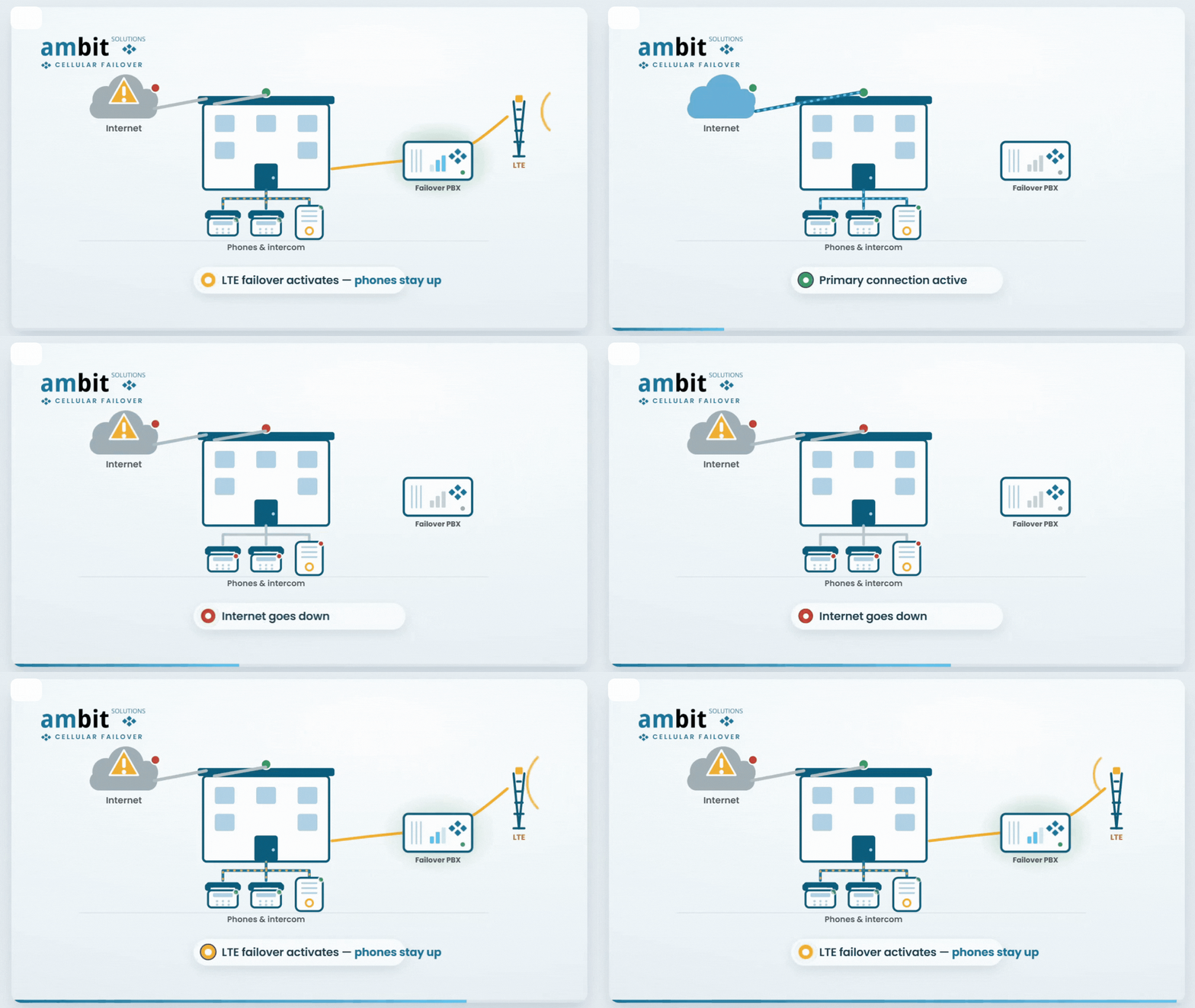
The failover system is built around your phone system, whether you run a cloud-hosted PBX, an on-premise system, a virtualized deployment, or a hybrid of all three.
Failover for every phone system
Cloud-hosted systems
Your cloud PBX stays online, but a building that loses internet cannot reach it. On-site LTE failover keeps outbound calling available and critical numbers reachable during a local outage.
On-premise systems
The strongest model. With an on-premise PBX and Ambit-hosted numbers, outbound and inbound calls can both survive an outage through your LTE-connected failover system.
Hybrid deployments
Cloud, on-premise and virtualized systems under one roof need site-by-site design. We engineer each location around its actual architecture so nothing is left uncovered.
Outbound and inbound failover
Outbound. Keeping outbound calls working is the core of every failover deployment. Once phones run through the local failover PBX, calls go out over LTE, which keeps front desk phones, administrative lines, safety phones and 911 dialing available.
Inbound. Inbound failover depends on your architecture and on whether Ambit hosts your numbers. For on-premise systems where Ambit manages your numbers, smart routing can automatically redirect inbound calls to your failover PBX. For cloud-hosted systems, Ambit can manually forward critical numbers to cell phones or other destinations, provided Ambit hosts your numbers and trunking. Learn about SIP trunking.
A different survivability requirement
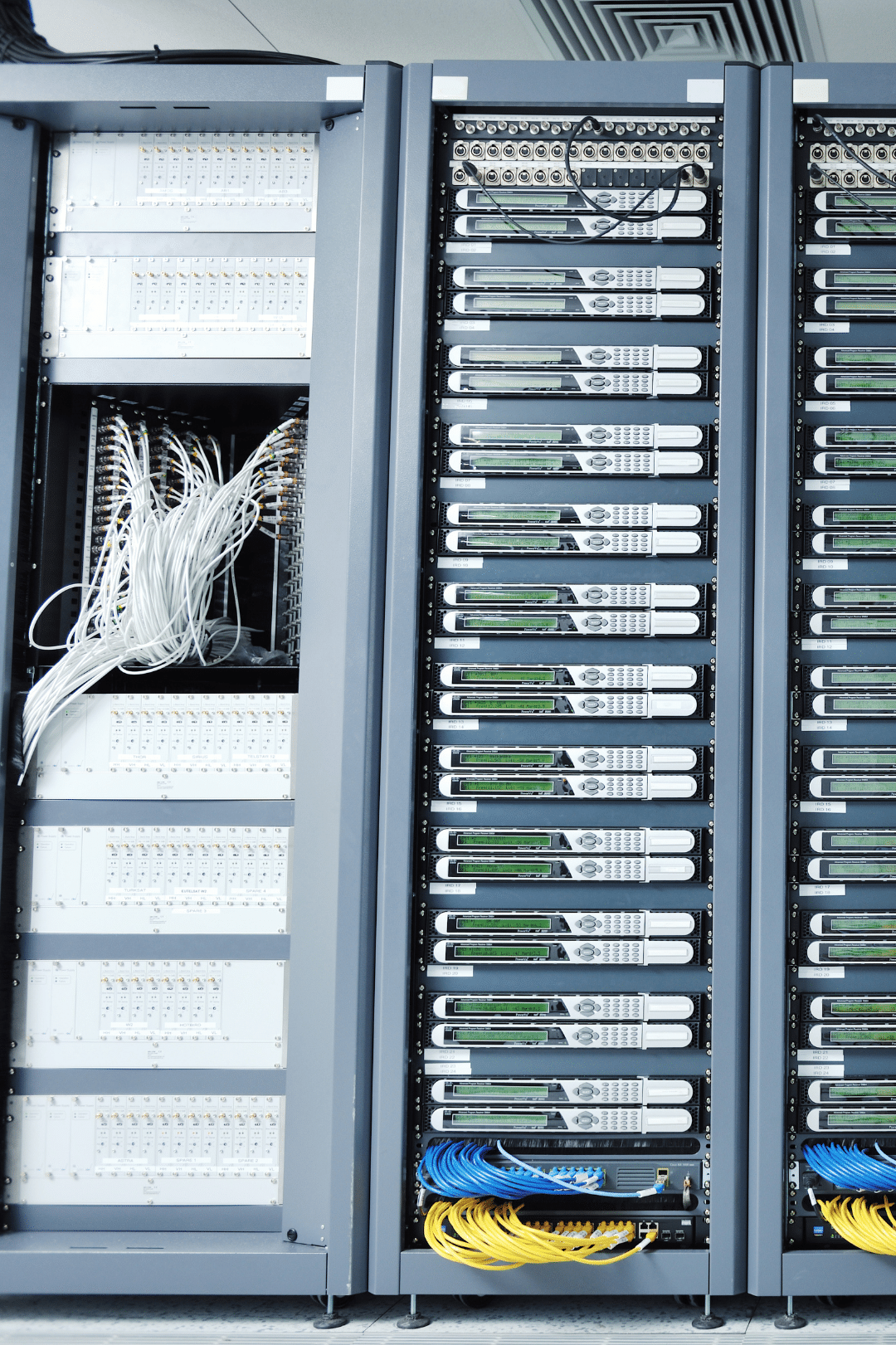
For schools, failover goes beyond phone calls. The intercom carries bell schedules, classroom announcements, office-to-classroom calls, emergency notifications and lockdown messages. If it goes down during an outage, the school loses more than phones.
That is why Ambit designs K-12 intercoms as on-premise systems. The server, speakers, classroom devices, paging logic and bell schedules all keep running inside the building network, with no need to reach an outside server. Storms, fiber cuts and carrier outages do not take the intercom with them.
Together, you get three layers:
- The on-premise intercom keeps internal paging and announcements working.
- The local failover PBX keeps outbound calling available through LTE.
- Ambit-controlled numbers allow smart inbound routing or manual forwarding.
For K-12 schools, a communication failure is rarely just technical. It becomes a safety, supervision and emergency response problem, and the design covers both.
A backup you have not tested is a guess
ADMP checks the health of your primary and failover systems, so you find problems before an outage does. In one live deployment it found hundreds of discrepancies between a primary and failover system and reconciled them in about 30 seconds, a job that used to take hours.
Built for places where phones are safety tools
For schools, government offices, healthcare facilities and public safety-adjacent organizations, phone availability during an outage is tied to emergency response. We design failover so the phones that matter most keep working: front office lines, 911 access points and administrative phones.
Related: K-12 phone, intercom and 911 systems, cities and counties, healthcare, how one vendor works, and cell boosting for in-building dead zones.
Frequently asked questions
Straight answers for IT directors and facilities teams.
What is cellular failover for a phone system?
An on-site failover PBX with an LTE modem that takes over when your internet connection fails, so phones can keep making outbound calls over cellular.
Does 911 still work during an outage?
Outbound 911 dialing stays available through the LTE connection once phones are running on the local failover PBX.
Will inbound calls still reach us?
It depends on your architecture. With an on-premise PBX and Ambit-hosted numbers, smart routing can redirect inbound calls to the failover PBX. For cloud-hosted systems, Ambit can forward critical numbers manually.
Does failover work with cloud-hosted phones?
Yes. The failover PBX is designed around your system, including cloud-hosted, on-premise, virtualized and hybrid setups.
What happens to our intercom?
Ambit designs K-12 intercoms as on-premise systems, so paging, announcements and bell schedules keep running when the internet does not.
How do we know the backup will work?
ADMP monitors the health of your primary and failover systems.
Is phone failover equipment eligible for E-Rate?
Voice services have not been E-Rate eligible since Funding Year 2019, and phone system hardware such as PBX equipment is not on the current Eligible Services List. USAC sets eligibility each year, and some related broadband and network components are treated differently, so check the current list before you build a budget. See USAC’s eligibility overview. Our E-Rate guide explains what E-Rate does cover.
Find out what your phones do when the internet fails
We review your phone system, your sites and your numbers, and design failover around how you actually run.
