
Cell Booster Solutions for Schools and Enterprises
Fix the dead zones before someone needs a call to go through.
Ambit designs and installs in-building cellular signal systems for classrooms, offices, stairwells, shelters and metal buildings. We start with a site survey, handle the installation and test the result, so your staff stay reachable on the major carriers.
Site survey first. Installed and tested by Ambit engineers. 24/7 U.S.-based support.
Why buildings block your signal
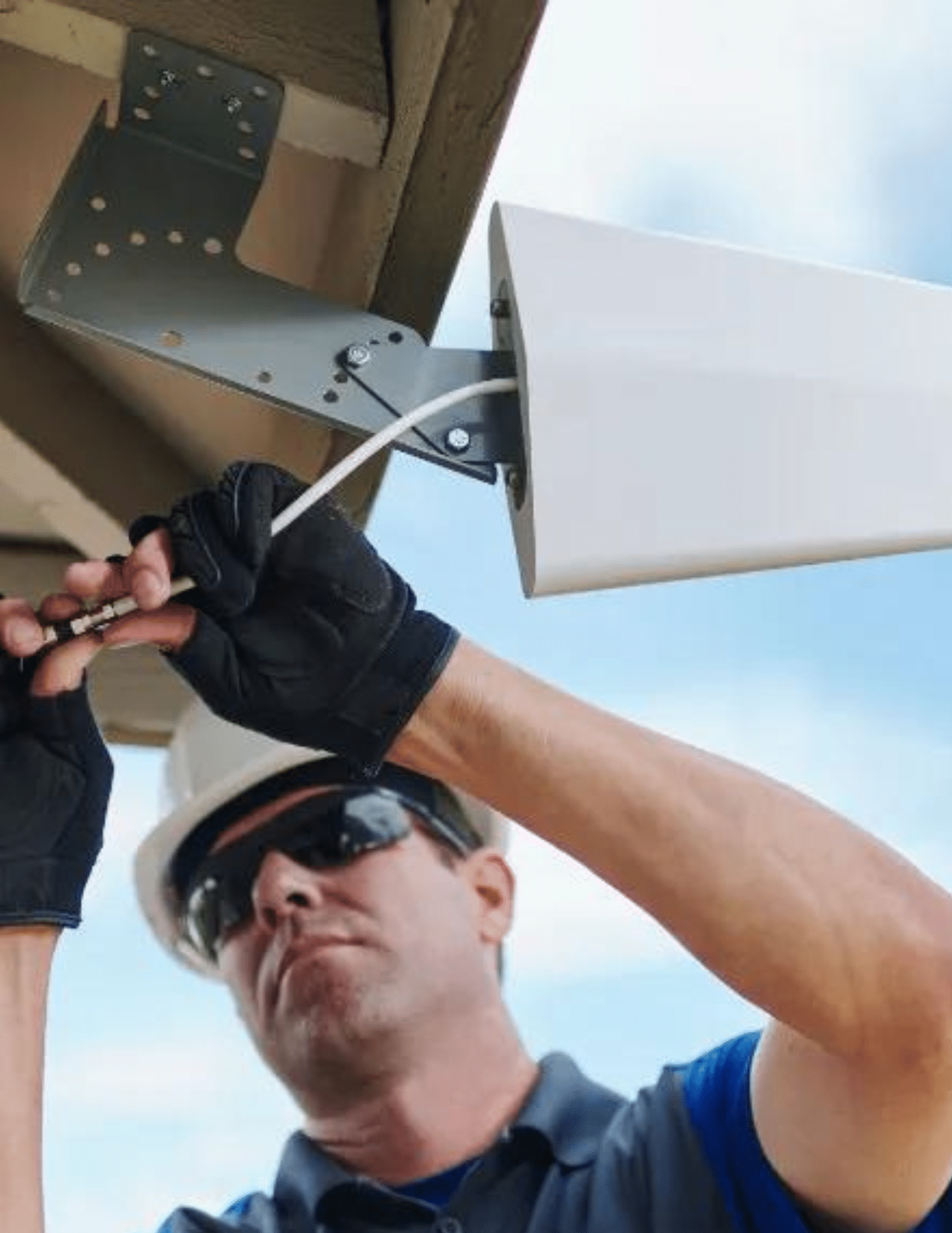
A cell signal has to get through the building before it reaches a phone. Metal roofs, thick masonry, energy-efficient glass and underground floors all absorb or reflect it, and a school can have all four.
- Metal roofs and metal buildings.
- Thick walls and masonry.
- Basements, stairwells and underground areas.
- Remote or far-edge spaces on a large campus.
Staff learn where the dead zones are the hard way, usually at the moment a call matters most.
Where cell boosters make the difference
Campuses and classrooms
Reliable coverage in classrooms, hallways, offices and throughout daily operations.
Safety zones and shelters
Strong signal in basements, stairwells and storm shelters, where communication is critical.
Large and hard-to-reach areas
Coverage in metal buildings, remote spaces and other structures that kill signal strength.
How cell boosting works
1. Reception
An outdoor antenna captures the existing signal from nearby towers.
2. Amplification
A booster strengthens the signal and pushes it deeper into your facility.
3. Distribution
Indoor antennas broadcast the improved signal throughout the building for reliable calls and data.
What you get
Reliable connectivity
Staff and administrators stay connected without interruption.
Safer critical areas
Strong signal in shelters, stairwells and gathering points.
Support for productivity
Faster, more dependable mobile communication across your campus.
Works with the major carriers
AT&T, Verizon, T-Mobile and more, from one system.
From site survey to tested coverage
1. Site survey
Every project starts here, so the system fits your actual building and not an assumption.
2. Design
We plan antenna locations and coverage zones around what the survey found.
3. Installation
Our engineers handle antenna placement, cabling and optimization.
4. Testing
We test the finished system before we call it done.
The team behind your coverage
Cell boosting covers the cellular side
Cellular failover covers your phones when the internet fails, and your on-premise IP intercom keeps working on its own. See how one vendor works, or explore K-12 phone, intercom and 911 systems.
Frequently asked questions
Straight answers for IT directors and facilities teams.
What is a cell booster?
A system that captures an outdoor cellular signal, amplifies it and rebroadcasts it inside your building through indoor antennas.
Does it work with every carrier?
It supports the major carriers, including AT&T, Verizon and T-Mobile, from one system. We confirm coverage for your carriers during the site survey.
Will it help people call 911 from inside the building?
A stronger signal helps mobile calls connect from inside the building, including calls to 911. Cell boosting is separate from your phone system’s 911 routing, which Ambit handles through NG911 compliance.
What happens at the site survey?
We measure signal across your building, find the dead zones and plan where antennas go. The survey is free.
Is a cell booster the same as in-building public safety radio coverage?
No. A cell booster improves cellular phone service. Public safety radio coverage is a different system, so tell us what your jurisdiction requires.
Can it be installed in a metal building or a storm shelter?
Yes. Those are the spaces cell boosting is built for.
Let’s find your dead zones
Schedule a free site survey and we will design coverage around your building, not an assumption.
